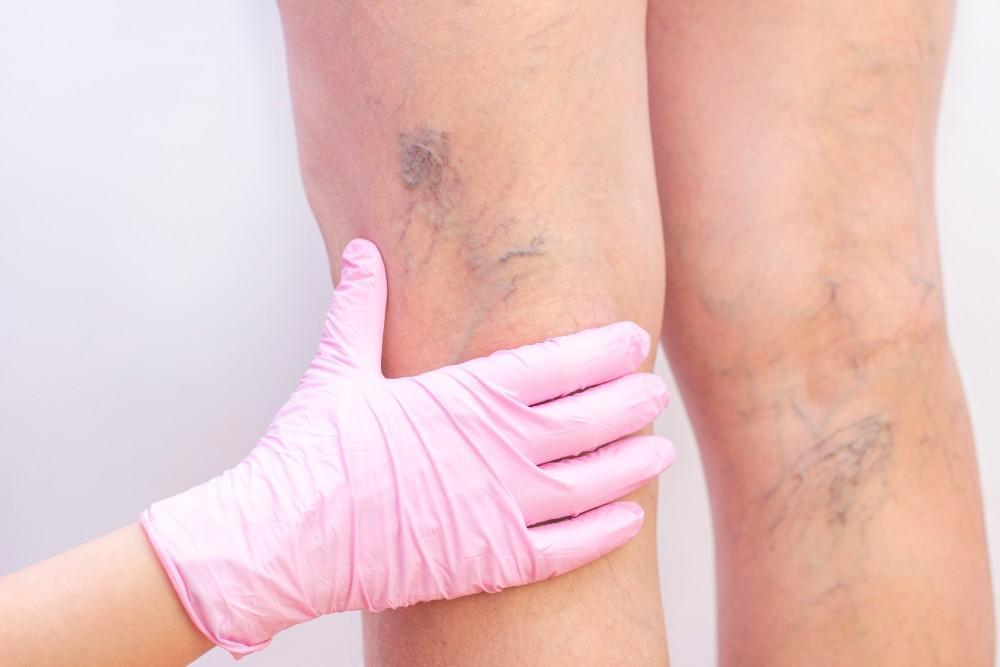
Do your legs feel heavy, tired, or achy at the end of the day? You might notice your socks leave deep indents, or your skin looks unusually dark and irritated. It is easy to dismiss these changes as simple aging or dry skin. However, these symptoms often point to an underlying circulation issue known as vein disease.
At MD Vein & Skin Specialists in Columbia, Maryland, Dr. Clement Banda helps people understand what may be causing these symptoms and which treatments may help. We specialize in diagnosing and treating varicose veins and other vein-related skin changes. Understanding the connection between your veins and your skin is the first step toward feeling comfortable again.
Why does vein disease cause skin changes?
Veins in your legs rely on one-way valves to help keep blood moving toward your heart. When those valves weaken or stop closing properly, blood can flow backward and pool in the lower legs, increasing pressure in the veins. Over time, this pressure forces fluid and red blood cells to leak into your surrounding skin tissue.
A 2023 review in Dermatology and Therapy explains that chronic venous pressure can allow red blood cells and inflammatory cells to leak into nearby tissue. Over time, iron-containing deposits and ongoing inflammation can contribute to discoloration, swelling, itching, and other skin changes seen with stasis dermatitis.
At our Columbia, Maryland office, we see how this inflammation progresses. When damaged superficial veins are contributing to the problem, treatments such as endovenous ablation may help redirect blood flow away from those veins and reduce venous pressure.
Is it a skin infection or vein disease?
Because stasis dermatitis causes red, warm, and swollen skin, it is frequently mistaken for cellulitis, a bacterial skin infection. This confusion can lead to unnecessary treatments.
In fact, misdiagnosis is incredibly common. A 2023 systematic review in the Journal of General Internal Medicine of 1,600 people initially diagnosed with cellulitis found that 41% were later given a different diagnosis. More than half of those misdiagnoses were due to stasis dermatitis, other eczematous dermatitis, or edema and lymphedema.
To get the right treatment, you need an accurate diagnosis. We use advanced duplex ultrasound to map your blood flow and see whether venous reflux or other circulation problems may be contributing. If you are experiencing persistent edema or swelling, we can pinpoint the exact cause.
How we restore your leg health
You do not have to live with heavy legs or progressive skin damage. Treating the underlying vein disease is the most effective way to protect your skin and restore your comfort.
For patients with advanced vein disease, early action makes a significant difference. In a 2019 clinical trial in Health Technology Assessment of adults with active leg ulcers, early vein ablation healed wounds in 56 days. Those with deferred treatment took 82 days.
Dr. Banda offers minimally invasive procedures like sclerotherapy and endovenous ablation. These treatments close problem veins so blood can reroute through healthier vessels. When venous reflux contributes to swelling or skin changes, treating the underlying vein problem may reduce pressure and support healing over time.
If you are struggling with heavy legs, swelling, or skin changes, let us help you find answers. Contact our team at MD Vein & Skin Specialists today to schedule your consultation.